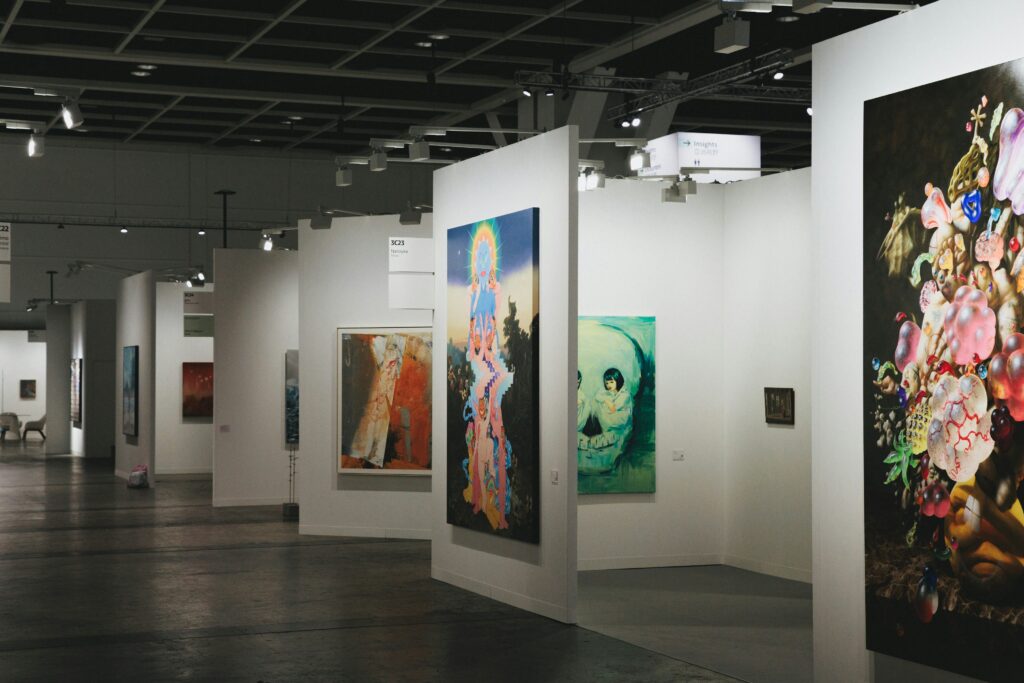

Atmosphere That Resonates
Creating a memorable art exhibit starts before the viewer even lays eyes on the first artwork. The emotional tone of the space sets a framework of expectation, curiosity, and mood. It’s not just what’s on the walls it’s what surrounds it.
Setting the Emotional Tone
The mood of an exhibition space can guide how the audience feels, thinks, and engages with the work. A dark, quiet room might amplify introspective pieces, while a bright, open space could energize and invite interaction.
Mood lighting contributes to emotional impact
Temperature, ambient noise, and even scent can add subtle layers of meaning
First impressions: visitors absorb the emotional tone immediately
Silent Storytelling Through Design
Great exhibits use the environment to speak as clearly as the artwork itself. Lighting, sound, and spatial layout act as silent storytellers subtly shaping how works are experienced.
Lighting: Guides attention, sets emotion, and adds dimension
Soundscape: From ambient tones to narrated experiences, audio embeds atmosphere
Spatial flow: Encourages exploration or reflection through deliberate pacing and arrangement
Ambiance as Artistic Enhancement
When ambiance aligns closely with theme and message, the exhibit becomes immersive rather than observational. Visitors don’t just view pieces they feel them.
Cohesive ambiance deepens emotional resonance
Environmental cues reinforce curatorial intent
Immersion enhances both memory and meaning
In essence, atmosphere isn’t background it’s part of the art.
Clear, Thoughtful Curation
A great exhibit doesn’t overwhelm it leads. Strong narratives are what turn a room full of art into a cohesive experience. Visitors want to feel like they’re on a journey, not just meandering through random pieces with plaques. That journey starts with intention. Every work shown should have a reason to be there, feeding into a bigger story, theme, or mood.
Pacing matters too. Rushing the eye from one bold piece to the next wears thin fast. Smart curation builds rhythm moments that punch, moments that breathe. And when the theme, artwork, and layout speak the same visual and emotional language, something clicks. Visitors feel it, even if they can’t quite name it.
From a curator’s standpoint, it’s about editing with purpose. Good curation isn’t about throwing in everything good. It’s about making choices that serve a larger concept. As one curator puts it in this sharp perspective on exhibits, the strongest rooms don’t just contain good art they make the visitor feel like they’re part of the idea. The goal isn’t to show off. It’s to let meaning rise naturally out of form, flow, and clarity.
Artwork Placement That Tells a Story
How and where artwork is placed within an exhibit isn’t just logistical it’s a narrative tool. The arrangement of pieces can influence how viewers interpret meaning, notice detail, and emotionally connect with the work.
Placement Shapes Perception
Strategic positioning guides the visitor’s eye and focus. Where a piece appears within the space can:
Frame it as a highlight or a supporting component
Invite close inspection or encourage broader thematic reflection
Shape the visual journey through contrast, alignment, or sequential flow
Finding the Balance
A memorable exhibit balances standout works with pieces that support context without overwhelming the visitor. This balance helps maintain the momentum and tone of the experience.
Key strategies include:
Featuring focal pieces prominently place them where sightlines naturally lead
Using supporting works to build a deeper story they provide nuance, background, or visual pause
Avoiding crowding high impact art deserves space to breathe
Rhythm and Breathing Room
Visual rhythm alternating between dense and open areas creates a pacing that encourages viewers to linger without fatigue. Breathing space is not wasted space; it:
Helps reduce sensory overload
Allows for reflection between works
Elevates the impact of standout pieces by contrast
Careful placement transforms an exhibit from a walk through display into an intentional, immersive experience that communicates just as much through flow and spacing as it does through content.
Visitor Engagement Beyond Observation
A memorable exhibit doesn’t just ask visitors to look it invites them to participate. Whether it’s a sound reactive wall, an interactive digital map, or a touchable textile installation, these elements pull people in and make the experience stick. Passive viewing has its place, but active exploration builds a stronger connection.
Good signage matters. A short, sharp explanation can open up a deeper understanding of the work. Add in layered access multimedia guides, QR codes with optional deep dives, or content designed for various age and ability levels and you create a space anyone can navigate and feel welcome in.
The best exhibits also leave room for reflection. That could mean seating in the right place. A prompt question. A pacing that doesn’t rush. These quiet choices allow visitors to slow down and connect their own stories to the art. Engagement isn’t just noise and motion. It’s that moment when someone walks away thinking differently.
Lasting Impressions Through Conceptual Strength
A light show might draw a crowd, but it won’t stick with anyone by morning. What does last the exhibits people still think about weeks later are the ones built with purpose. Thoughtful intention, not scale or shock, drives impact. Audiences can sense when there’s real meaning beneath the surface.
Great exhibitions ask a question, tell a story, or challenge a belief. They don’t need to shout. They invite pause. They create space space to think, feel, disagree, change. And that’s the point: provocation without gimmick, depth without distraction. Every artistic choice, from the first piece to the last step out, is tethered to a why.
Curators who focus on concept over spectacle shape experiences that linger. They build exhibits like essays structured, clear, layered. For a closer look at this kind of curatorial craft, visit this perspective on strong exhibition design. It dives into how meaning not flash makes an exhibition unforgettable.
Takeaways for Creators and Curators
The best exhibits don’t just show art they tell a story. That means curators need to think less like archivists and more like authors. What narrative thread ties everything together? What emotional note do you want visitors to carry with them when they leave? The design of an exhibit should serve that story, not distract from it. Layout, pacing, and signage aren’t just logistics they’re part of the message.
Big ideas are easier to absorb when grounded in the small and specific. A single artist’s letter, a grainy photo, or the texture of a room can do more than a paragraph of wall text. These human sized moments help people feel connected instead of overwhelmed.
More isn’t better. In fact, too many pieces or too much text dilutes impact. Great exhibits have a strong core concept, a clear rhythm, and just enough to spark curiosity without exhausting attention spans. What lingers isn’t the amount it’s the clarity. When everything has a reason to be there, visitors walk away remembering not just what they saw, but what they felt.
 Vanessa E. has opinions about art movement discussions. Informed ones, backed by real experience — but opinions nonetheless, and they doesn't try to disguise them as neutral observation. They thinks a lot of what gets written about Art Movement Discussions, Creative Inspiration and Ideas, Artist Spotlights is either too cautious to be useful or too confident to be credible, and they's work tends to sit deliberately in the space between those two failure modes.
Reading Vanessa's pieces, you get the sense of someone who has thought about this stuff seriously and arrived at actual conclusions — not just collected a range of perspectives and declined to pick one. That can be uncomfortable when they lands on something you disagree with. It's also why the writing is worth engaging with. Vanessa isn't interested in telling people what they want to hear. They is interested in telling them what they actually thinks, with enough reasoning behind it that you can push back if you want to. That kind of intellectual honesty is rarer than it should be.
What Vanessa is best at is the moment when a familiar topic reveals something unexpected — when the conventional wisdom turns out to be slightly off, or when a small shift in framing changes everything. They finds those moments consistently, which is why they's work tends to generate real discussion rather than just passive agreement.
Vanessa E. has opinions about art movement discussions. Informed ones, backed by real experience — but opinions nonetheless, and they doesn't try to disguise them as neutral observation. They thinks a lot of what gets written about Art Movement Discussions, Creative Inspiration and Ideas, Artist Spotlights is either too cautious to be useful or too confident to be credible, and they's work tends to sit deliberately in the space between those two failure modes.
Reading Vanessa's pieces, you get the sense of someone who has thought about this stuff seriously and arrived at actual conclusions — not just collected a range of perspectives and declined to pick one. That can be uncomfortable when they lands on something you disagree with. It's also why the writing is worth engaging with. Vanessa isn't interested in telling people what they want to hear. They is interested in telling them what they actually thinks, with enough reasoning behind it that you can push back if you want to. That kind of intellectual honesty is rarer than it should be.
What Vanessa is best at is the moment when a familiar topic reveals something unexpected — when the conventional wisdom turns out to be slightly off, or when a small shift in framing changes everything. They finds those moments consistently, which is why they's work tends to generate real discussion rather than just passive agreement.