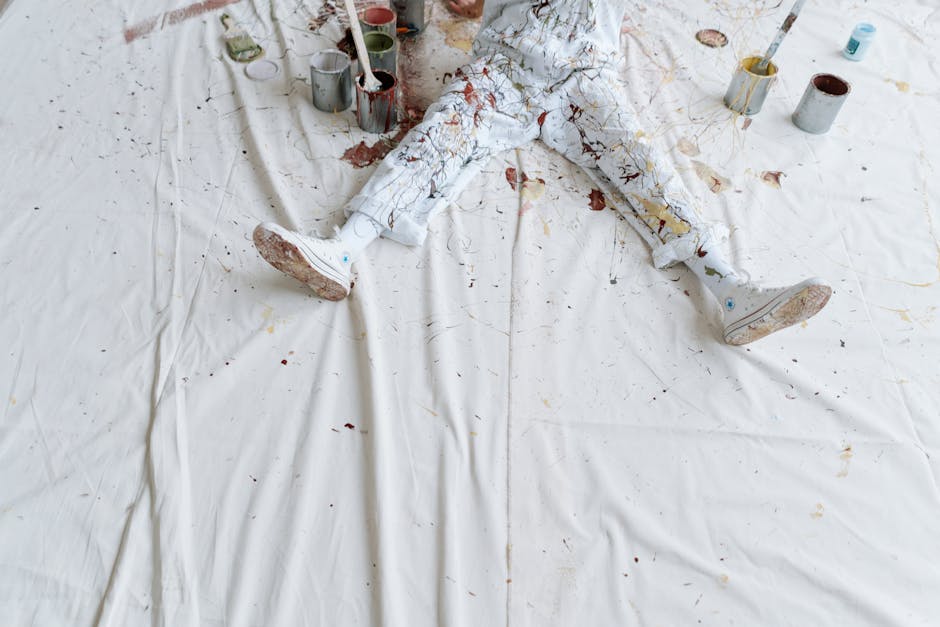

Why the Subconscious is a Creative Goldmine
The subconscious isn’t soft. It’s dense, raw, and packed with layers memories, feelings, symbols some ancient, some deeply personal. It doesn’t speak in straight lines or clean logic. It whispers in images, in flashes, in half remembered dreams.
Artists who tap into it don’t just make good work they make work that lingers. Dalí pulled from the surreal edges of sleep. Kahlo drilled into pain, but filtered it through metaphor and myth. Miró bypassed predictability entirely, letting instinct scribble over precision. These weren’t accidents. They went inward on purpose.
When creativity flows from the subconscious, originality gets real. Ideas show up unpolished but honest. Spontaneity leads. That tiny image scrawled without thinking? It might say more than a hundred technically perfect sketches. This isn’t just expression it’s excavation. No filters, no edits. Just uncut vision. That’s where the edge is.
Techniques to Access Subconscious Imagery
You can’t force the subconscious to speak. You have to give it space, then get out of the way. Free association drawing and automatic writing do exactly that. Start moving your hand no plan, no edits. Let the pen wander, let the words fall out. Don’t stop to judge. That raw, unfiltered matter is often where the real signal hides.
Dream journaling is gold, too. Capture your dreams the moment you wake up even fragments. There’s a different logic in that world. Objects morph, time bends, and symbols surface. Over time, patterns show up. Recurring imagery. Emotional threads. These aren’t random they’re a map.
Meditation and altered states help when you hit a wall. Not the mystical kind just quiet enough to dull the noise of conscious filters. The idea is to bypass logic, to short circuit the inner editor. That’s when something quieter and usually truer shows up.
Put precision on the shelf for a while. Experiment with texture, movement, pressure. Let instinct drive the mark making. It’s not about making it look right. It’s about making it feel honest. The goal isn’t perfection. It’s access.
Blending Reality with Intuition
Some of the strongest creative breakthroughs come when artists stop choosing between accuracy and instinct and start letting both exist on the same page. Combining direct observation with subconscious flow unlocks work that feels grounded and raw at once. You might be sketching the shape of a tree with precision, then suddenly see that same tree as a symbol for patience, loss, or memory. The eye records the form, but the psyche overlays the meaning.
Nature is one of the best portals for this kind of fusion. It doesn’t ask anything of you. No rules to follow, no end goal. Whether you’re walking through the woods or staring at the shape of clouds, the natural world invites your conscious mind to slow down while your subconscious starts doing the talking. Texture, rhythm, decay, growth they start to echo things inside you. Use that.
The point isn’t to make a perfect leaf. The point is to let the leaf call something up in you. Then draw from that, too.
For more on how artists are integrating nature and dream state expression, check out nature inspired art.
When Subconscious Imagery Unlocks Style and Voice

Look closely at any body of work created from a raw, intuitive place and you’ll start to notice patterns. A certain line. A repeated shape. A color that keeps surfacing, even without conscious choice. These are not accidents. They’re mental fingerprints symbols, marks, and gestures that speak the language of your subconscious.
That’s the breakthrough point for many artists. What starts as exploration becomes identity. The subconscious isn’t just a creative spark it’s a signature. The loops, strokes, and metaphors that filter through when no one’s watching often say more than deliberate design ever could. It’s how a seemingly abstract image suddenly feels personal, familiar, or haunting.
The key isn’t to force meaning but to observe quietly. Track what shows up over and over again. Let your visual language grow out of that repetition. You don’t have to explain it. In fact, the best parts often defy explanation. That’s what gives your work staying power it whispers instead of shouts, inviting the viewer to feel instead of just look.
Cultivating Artistic Depth, Not Just Aesthetics
Work that taps into the subconscious doesn’t just look good it feels like something. There’s a current running underneath it. You can’t always name it, but you know it’s there. That’s what sets subconscious driven art apart. It bypasses surface level polish and speaks to something more primal memory, intuition, personal myth.
Audiences don’t always need to understand a piece logically to be moved by it. Dream logic works in symbols and atmospheres. It mirrors how we experience memory and emotion in our own lives fragmented, suggestive, unresolved. Art created from that place resonates because it mirrors that inner landscape.
Visuals pulled from deep within the repeated figure, the distorted shape, the unfinished mark become anchors for meaning. They echo the way we make sense of ourselves. Which is why people stop scrolling for work that feels haunted by something honest, even if they can’t tell you what it is.
For more on how the natural world can stir this kind of internal response, check out this deeper read on nature inspired art.
Getting Past the Inner Critic
Perfectionism is the enemy of subconscious creation. When you’re chasing clean lines and polished outcomes, you miss the raw power that comes from letting go. What the subconscious offers isn’t tidy it’s layered, obscure, emotional. And that’s where the original work lives.
Letting the mind wander without judgment through automatic drawing, stream of thought writing, or unfiltered mark making starts to cut through the noise. You stop trying to make something good, and you start making something real. Giving form to that inner clutter doesn’t create chaos; it organizes it. A stuttering thought becomes a color wash. A memory you don’t quite understand becomes a shape or gesture. From jumble to clarity not with logic, but with presence.
The trick to staying connected to this process is repetition. You won’t reach anything meaningful if you’re only dipping your toe in. Set aside time whether five minutes at dawn or a sketchbook page before bed and keep showing up. Subconscious access isn’t a switch, it’s a tunnel. You dig through it gradually, and what you find along the way becomes your voice.
Final Shift: Making It Personal
Start where it’s quiet. One dream. One symbol. One emotion that sticks with you. You don’t need a grand concept or high level technique to begin just something real. A burned tree from a nightmare. The shape of your grandfather’s old cap. An ache you can’t name.
From there, lean hard on instinct. Let the brush wander. Let the pencil trace what your hand remembers, not what your eye expects. Technique is useful later refinement, editing, presentation. But in the early stages, forget polish. Let the raw material speak first.
And here’s the difference maker: make it yours. Not borrowed from Pinterest, not echoing your favorite artist. Work that starts from within holds weight. It carries the fingerprints of your psyche. It may not be perfect, but it carries truth. People feel that. Style emerges from repeating what matters to you, not what’s trending. Imitation fades. Voice sticks.
 Ismael Stansburyear has opinions about art exhibitions and reviews. Informed ones, backed by real experience — but opinions nonetheless, and they doesn't try to disguise them as neutral observation. They thinks a lot of what gets written about Art Exhibitions and Reviews, Artist Spotlights, Techniques and Tutorials is either too cautious to be useful or too confident to be credible, and they's work tends to sit deliberately in the space between those two failure modes.
Reading Ismael's pieces, you get the sense of someone who has thought about this stuff seriously and arrived at actual conclusions — not just collected a range of perspectives and declined to pick one. That can be uncomfortable when they lands on something you disagree with. It's also why the writing is worth engaging with. Ismael isn't interested in telling people what they want to hear. They is interested in telling them what they actually thinks, with enough reasoning behind it that you can push back if you want to. That kind of intellectual honesty is rarer than it should be.
What Ismael is best at is the moment when a familiar topic reveals something unexpected — when the conventional wisdom turns out to be slightly off, or when a small shift in framing changes everything. They finds those moments consistently, which is why they's work tends to generate real discussion rather than just passive agreement.
Ismael Stansburyear has opinions about art exhibitions and reviews. Informed ones, backed by real experience — but opinions nonetheless, and they doesn't try to disguise them as neutral observation. They thinks a lot of what gets written about Art Exhibitions and Reviews, Artist Spotlights, Techniques and Tutorials is either too cautious to be useful or too confident to be credible, and they's work tends to sit deliberately in the space between those two failure modes.
Reading Ismael's pieces, you get the sense of someone who has thought about this stuff seriously and arrived at actual conclusions — not just collected a range of perspectives and declined to pick one. That can be uncomfortable when they lands on something you disagree with. It's also why the writing is worth engaging with. Ismael isn't interested in telling people what they want to hear. They is interested in telling them what they actually thinks, with enough reasoning behind it that you can push back if you want to. That kind of intellectual honesty is rarer than it should be.
What Ismael is best at is the moment when a familiar topic reveals something unexpected — when the conventional wisdom turns out to be slightly off, or when a small shift in framing changes everything. They finds those moments consistently, which is why they's work tends to generate real discussion rather than just passive agreement.