Digital Aesthetics Are the New Default
For tech native generations, design isn’t something you learn it’s something you grow up embedded in. Swiping, scanning, scrolling it all shapes how visual language is absorbed and expressed. The result? A new fluency rooted in digital aesthetics, where imperfection isn’t a glitch it’s the point.
Glitch art, pixelation, lo fi compression once constraints of early web tech, now front and center by choice. Younger creators lean into the raw and the broken because it feels real. It’s rebellion against over polished design. Aesthetic choices that were once signs of technical failure are now intentional layers of texture, mood, or irony. Nothing is too clean, and that’s by design.
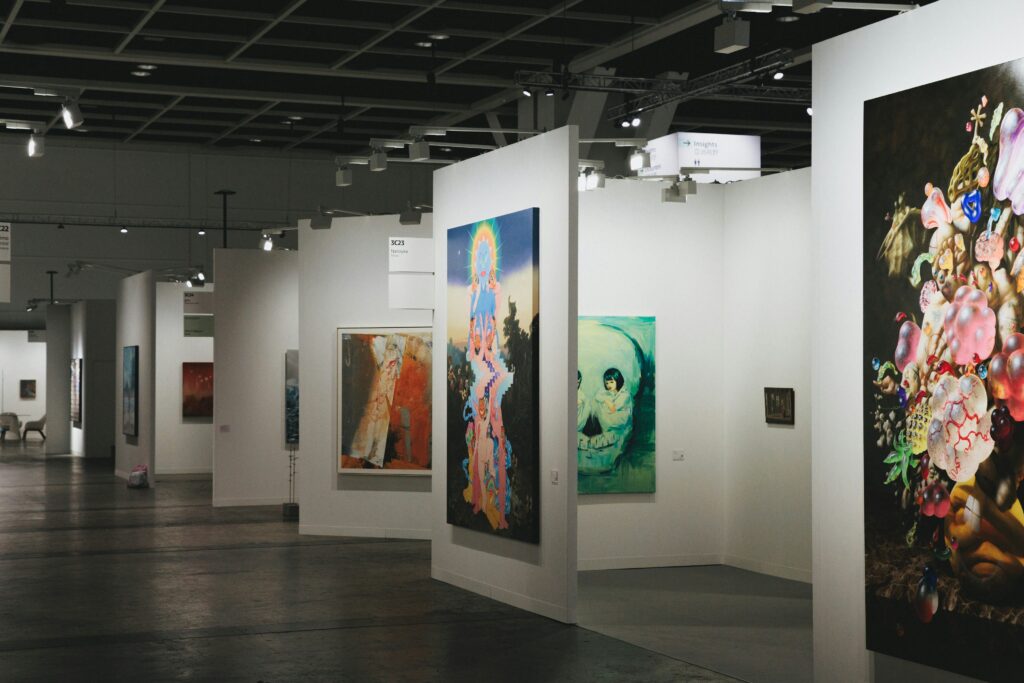
And this isn’t locked to screens. Visuals born online are bleeding into the physical world. Think sculpture with digital cascades, wall projections behaving like browser crashes, rooms that feel like you walked into a YouTube thumbnail. The boundaries between URL and IRL continue to erode, especially in exhibitions, fashion, and retail spaces. For this generation, there’s no line between digital and real only how well you can translate one into the other.
Hyper Reality and the Influence of AI
AI Visuals Are Setting New Norms
The rise of AI generated imagery in contemporary visual culture isn’t simply a trend it’s reshaping how people define creativity and visual authenticity. Apps like DALL·E and MidJourney are no longer novelties; they’re creative tools influencing everything from brand design to fine art exhibitions.
AI tools now play a regular role in early concept design and mood board development
Visual styles born from text prompts surreal mashups, hyper clean forms, dreamlike distortions are becoming aesthetic genres of their own
The AI curated visual is often indistinguishable from traditionally rendered work, challenging the viewer’s expectations
A Post Originality Era?
With millions of AI generated images created daily, the notion of “originality” is rapidly evolving. Are we moving toward a post originality creative era one where remix culture finally overtakes the pursuit of the new?
Prompts act as the new brushstrokes, shifting authorship to co creation with algorithms
The repeated use of certain visual tropes has sparked debates around visual monotony vs. new standards
Audiences, increasingly fluent in AI aesthetics, apply different criteria when interpreting visual content
Prompt Engineering as a Creative Practice
Artists and designers now approach text prompts with the skill and nuance once reserved for traditional mediums. Prompt engineering is fast becoming a legitimate creative craft a merger of language, vision, and machine learning.
Complex, layered prompts yield nuanced and unpredictable results
User mastery over AI platforms now differentiates amateurs from professional visual creators
The aesthetic language of 2026 is being shaped by how humans communicate with machines
In short, AI is not only generating visuals it is generating visual trends, and it’s redefining the relationship between the creator, the tool, and the viewer.
Post Internet Art at the Forefront
Post internet art isn’t new but in 2026, it’s finally getting the recognition it deserves. Academic institutions are carving out space for it in curricula and research, while galleries and collectors are leaning into its market value. This isn’t just about aesthetics pulled from memes, glitches, or web archives. It’s about a broader shift: artists treating technology not just as a tool, but as a subject in itself.
Think less “using Photoshop” and more “what does algorithmic logic say about our worldview?” These artists are unpacking how broadband shaped memory, why social feeds condition emotion, or how surveillance culture creeps into domestic life. In other words, the internet isn’t just the background it’s the material.
That lens is resonating. With critics. With curators. And with an audience that grew up breathing Wi Fi. For a deeper look at this evolving frontier, explore our post internet art guide.
Visual Culture Goes Social, Again
Platforms like TikTok and BeReal aren’t just places to kill time they’ve become engines of visual vocabulary. In 2026, social media is where visual culture is not only shared, but shaped in real time. Niche platforms, from art focused micro networks to hyper local image boards, are creating fragmented but fiercely loyal visual subcultures.
The common thread? Imperfection. Ephemeral, lo fi content feels more believable and that matters. A shaky camera, bad lighting, and raw audio actually send a message: this is real. We’re seeing a move away from polished, production heavy media in favor of fast, honest snapshots of life, ideas, and identity.
It’s not just nostalgia it’s strategy. Creators are embracing these formats to build trust and intimacy. When your post feels like it could disappear at any moment, the viewer leans in. Community led aesthetics are defining the moment because they invite participation, not just consumption. It’s less about looking good and more about feeling seen.
Eco Conscious Design Takes the Spotlight
In 2026, visual culture isn’t just about style it’s about values. Sustainability has moved from the sidelines to the center of creativity, and today’s visual storytelling often doubles as an environmental statement. Artists and designers are making deliberate choices that reduce waste, rethink materials, and challenge throwaway aesthetics.
Recycled, reused, and digital native materials are taking over creative workflows. Think posters printed on scrap paper, art installations incorporating e waste, or entire campaigns housed purely in digital spaces to cut down on physical production. It’s not about doing less it’s about doing differently.
Meanwhile, analog is enjoying a quiet revival among eco conscious creators. Zines, risographs, even letterpress printing once niche or nostalgic are back in play. Tactile, handmade media is being woven into digital storytelling to create a sensory contrast. In eco focused circles, this blend of the tangible and the virtual strengthens the message: create with intention, not excess.
Eco conscious design isn’t a trend. It’s becoming a baseline expectation.
3D, Spatial, and Immersive Art Forms Gain Ground
We’re well past the novelty phase. AR and VR aren’t fringe tech experiments anymore they’ve become standard tools in how people consume, explore, and even co create visual content. Immersive spaces are showing up not just in galleries or gaming, but in shopping centers, public parks, and online meeting rooms. Spatial storytelling is becoming second nature for younger audiences who navigate virtual worlds with the same fluency as real ones.
Designers aren’t doing this alone. They’re teaming up with urban planners, architects, and technologists to shift how we experience environments. The result: public art that responds to your movement, store displays that change based on neighborhood data, and exhibitions that blend geography with digital layers.
For creators and brands, this isn’t just about tech it’s about reach. Virtual galleries let artists bypass physical limits. Augmented displays let brands tell stories on sidewalks, not just screens. And for vloggers and personal media makers? Expect spatial video and immersive layers to enter the toolkit fast. If your audience can step into your world with a headset or phone, they’ll stay longer and remember more.
Looking Ahead
Visual culture in 2026 sits at a strange crossroads. On one side is a push for transparency real creators, behind the scenes shots, raw processes laid bare. On the other, simulation takes center stage hyper edited everything, AI generated perfection, and environments more imagined than lived. The tension is real. And instead of choosing sides, creators are blending both.
This hybrid expression is redefining what art even is. In a world where physical, digital, and virtual all coexist, intent and context matter more than medium. A digital rendering can feel more real than a canvas. A glitchy, AI generated image might say more about the world than a traditional photo ever could. It’s not about old definitions anymore 2026 is bringing a layered understanding of what cultural output looks like when reality itself is elastic.
What’s shifting isn’t just technique it’s self awareness. Audiences are savvy. They know when they’re being sold to, and they crave work that knows what it’s doing. The most impactful visual creators aren’t pretending they’re not using filters or AI tools they’re owning it, bending the medium, and making something that reflects this fluid moment.
Dive deeper into post internet influences
 Anthony Jacksonavarro is the kind of writer who genuinely cannot publish something without checking it twice. Maybe three times. They came to creative inspiration and ideas through years of hands-on work rather than theory, which means the things they writes about — Creative Inspiration and Ideas, Contemporary Art Insights, Techniques and Tutorials, among other areas — are things they has actually tested, questioned, and revised opinions on more than once.
That shows in the work. Anthony's pieces tend to go a level deeper than most. Not in a way that becomes unreadable, but in a way that makes you realize you'd been missing something important. They has a habit of finding the detail that everybody else glosses over and making it the center of the story — which sounds simple, but takes a rare combination of curiosity and patience to pull off consistently. The writing never feels rushed. It feels like someone who sat with the subject long enough to actually understand it.
Outside of specific topics, what Anthony cares about most is whether the reader walks away with something useful. Not impressed. Not entertained. Useful. That's a harder bar to clear than it sounds, and they clears it more often than not — which is why readers tend to remember Anthony's articles long after they've forgotten the headline.
Anthony Jacksonavarro is the kind of writer who genuinely cannot publish something without checking it twice. Maybe three times. They came to creative inspiration and ideas through years of hands-on work rather than theory, which means the things they writes about — Creative Inspiration and Ideas, Contemporary Art Insights, Techniques and Tutorials, among other areas — are things they has actually tested, questioned, and revised opinions on more than once.
That shows in the work. Anthony's pieces tend to go a level deeper than most. Not in a way that becomes unreadable, but in a way that makes you realize you'd been missing something important. They has a habit of finding the detail that everybody else glosses over and making it the center of the story — which sounds simple, but takes a rare combination of curiosity and patience to pull off consistently. The writing never feels rushed. It feels like someone who sat with the subject long enough to actually understand it.
Outside of specific topics, what Anthony cares about most is whether the reader walks away with something useful. Not impressed. Not entertained. Useful. That's a harder bar to clear than it sounds, and they clears it more often than not — which is why readers tend to remember Anthony's articles long after they've forgotten the headline.