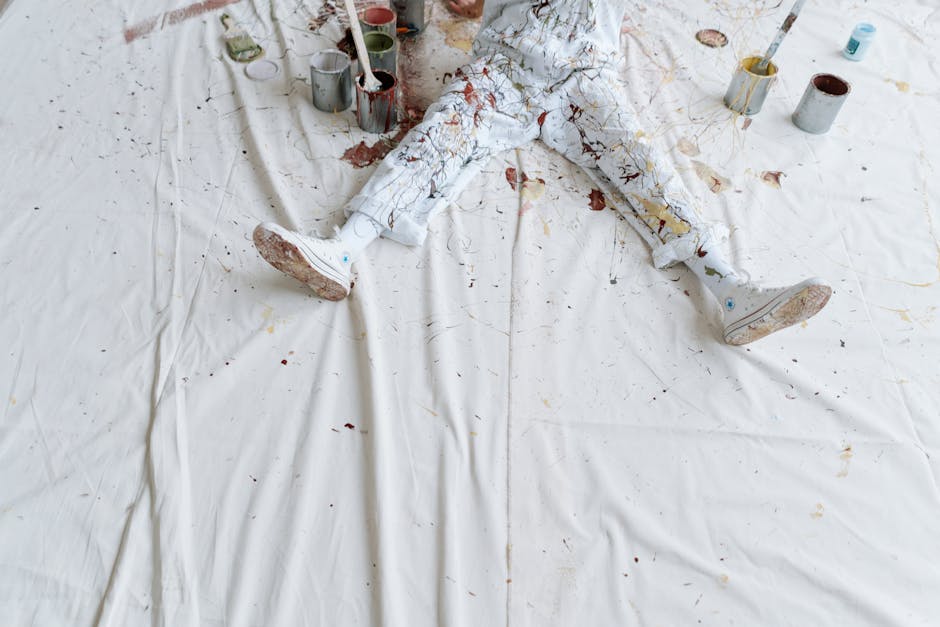

Looking Beyond the Studio
You don’t need a studio with skylights and two grand worth of supplies to make something meaningful. Creativity usually shows up in smaller places kitchen counters, sidewalks, the glove compartment you haven’t cleaned out in years. It’s not about having the right space. It’s about seeing what’s already there.
Artists today are pulling ideas from the mundane because that’s where the human stuff lives. A crumpled receipt tells a story. So does a chipped drinking glass or a half used roll of tape. These aren’t just props they’re proof of life being lived. When you stop waiting for perfect and just look harder at what’s in front of you, everything becomes material.
The best work doesn’t always come from inspiration striking like lightning. It comes from training your eye to notice the pattern in frost on a window, the way light hits a cracked sidewalk. These small, overlooked moments carry emotion, texture, and tension. That’s why the mundane can punch louder than the extraordinary: it speaks to what we all recognize but often ignore.
Common Objects, Uncommon Ideas
A cracked teacup, a lint sheet left from the dryer, a rusted nail pulled from an old fence none of these scream “art.” But sometimes, their ordinariness is exactly what gives them power.
Materials like these show wear. They tell quiet, reliable stories. A chipped edge says the teacup mattered enough to keep. The lint sheet is a soft echo of every shirt worn that week. The rusted nail held something together once, maybe too long. These are objects that carry rhythm of use, of time, of care neglected or given. Artists drawn to these items aren’t just scavenging they’re listening.
Found object art isn’t a new idea. Dada called it absurd and pointed, a rebellion against polished museums and polite society. Think Duchamp’s urinal: raw, confrontational, unforgettable. Later, Arte Povera used everyday scraps as a protest against the consumerist art world steel wool, sticks, rocks. Today, the movement lives on in a quieter way. Artists combine debris with design, giving fresh weight to the castoff. Instagram might show a perfectly lit pile of corroded washers transformed into a statement on decay, labor, time.
The point? Art doesn’t have to come from art stores. Sometimes you find it in the trash. Other times, it’s sitting ignored on your windowsill.
The Power of Context
Objects aren’t just what they are they’re where and how we find them. A hammer on a hardware shelf is a tool. Mounted on a gallery wall under stark light, it turns into a symbol: labor, violence, creation. Context bends meaning.
Artists and designers have long played with this shift. Change the lighting, scale it up, isolate it and suddenly, a mundane item speaks. Marcel Duchamp’s “Fountain” flipped a urinal into provocation. Sarah Lucas arranged household goods into raw meditations on gender. More recently, artists have floated brooms mid air or projected shadows of spoons onto cathedral walls. Same objects, radically different emotional weight.
Sometimes it’s not even about altering the object, but just relocating it. A plastic chair, propped in a forest clearing, becomes a statement about contrast. A stack of used gloves shown under bright clinical lighting can trigger feelings of fragility and exhaustion.
In each case, context does the heavy lifting. The takeaway? Shift the frame, shift the feeling. What you see isn’t just about the object it’s about where, when, and how you meet it.
Material as Message
A chipped plate says something that a pristine one can’t. Texture, weight, even the origin of a material these aren’t just technical details; they’re part of the message. When an artist picks an old floorboard or a strand of unraveling rope instead of canvas or bronze, it’s not just for shock value. It’s a statement about memory, value, fragility, and time.
There’s power in choosing what others overlook. A piece of plastic wrap from a hospital bandage can point to healing or vulnerability. Concrete dust might represent decay, limitation, or raw potential. Artists who work with these materials aren’t trying to be clever they’re aiming for honesty. By selecting what’s typically ignored, they surface truths others don’t see.
Then there’s the tension in combining them. Silk next to rust. Lace sewn into tarp. The beauty is in the friction. These unexpected pairings not only challenge the viewer’s assumptions about function and worth, they open up emotional space. One material elevates the other or complicates it. And that’s where deeper meaning starts to unfold.
Explore more insights on unusual material sources
How to Train Your Eye
Notice the Unnoticed
Artistic inspiration doesn’t always arrive in grand, sweeping gestures. In fact, it often starts with the smallest observations. Training your eye to see beyond the obvious is a quiet practice but a powerful one.
Try building intentional rituals that sharpen your perception:
Take slow walks and observe small details cracked pavement, mailboxes, shadows.
Pick one object a day to study: its shape, texture, and context.
Set a five minute timer to find something visually interesting in a familiar space.
Keep a Visual Journal
Chronicling what captivates you is one of the easiest ways to stay connected to your creativity. A visual journal isn’t about creating perfect pages it’s about documenting fleeting thoughts and textures before they slip away.
Consider including:
Quick photos of what draws your eye
Scribbled notes on colors, gestures, objects
Pressed paper scraps, fabric samples, or light sketches
These entries become a record of your evolving perspective and a source of future inspiration.
Lead With Curiosity
Perfectionism can stall creativity long before it begins. Instead of waiting for a ‘perfect moment’ or polished outcome, move toward what genuinely sparks your curiosity.
Ask questions about objects around you, even if they seem trivial
Embrace detours and experimentation mistakes are often visual gold
Remember: observation is a creative act in itself
Curiosity turns the mundane into the marvelous. When you allow wonder to guide you, every cracked tile and rusted hinge becomes a world waiting to be translated into art.
Start Small, Think Big
You don’t need a warehouse of supplies or a grant to start creating. Look at what’s around you literal scraps. Grocery receipts, bottle caps, dryer lint, drawer dust. These aren’t just leftovers. They’re forgotten textures and overlooked patterns waiting to be framed, layered, burned, folded, or transformed.
Some of the most compelling art starts in limitation. One artist stitched a year’s worth of receipts into a tapestry documenting consumer life. Another constructed entire cityscapes from discarded hardware and bottle caps. A third used drawer dust yes, actual dust to create delicate tonal drawings. None of them waited for better tools; they started with what was already there.
This kind of work pushes the question: what makes something worthy of attention? When the material is humble, the idea behind it has to do the heavy lifting and that’s where things get interesting. Constraints tend to spark invention, not stifle it.
Big ideas often enter through small, unexpected doors. So before you throw something away, ask yourself: could this be re seen? Could this be re used?
(More creative strategies via unusual material sources)
Final Takeaway
Calling something “just stuff” misses the point. Everyday objects live with us. They gather fingerprints, scratches, memories. The chipped plate from your first apartment. The keychain from a city you barely remember. This isn’t clutter it’s texture. It’s story. These things anchor us to emotion, time, and place, whether we realize it or not.
For artists, that’s gold. When you stop searching for inspiration in the extraordinary and start really seeing the ordinary, the game changes. A bent spoon becomes a line. A bus ticket becomes palette. Noticing isn’t a passive act it’s practice. It’s choosing to care about what most people overlook. And in that choice, you don’t just find inspiration. You shape it.
Art doesn’t begin with perfect tools or flashy ideas. More often, it starts with the overlooked pencil stub at the bottom of the drawer. The rest is what you do with it.
 Ismael Stansburyear has opinions about art exhibitions and reviews. Informed ones, backed by real experience — but opinions nonetheless, and they doesn't try to disguise them as neutral observation. They thinks a lot of what gets written about Art Exhibitions and Reviews, Artist Spotlights, Techniques and Tutorials is either too cautious to be useful or too confident to be credible, and they's work tends to sit deliberately in the space between those two failure modes.
Reading Ismael's pieces, you get the sense of someone who has thought about this stuff seriously and arrived at actual conclusions — not just collected a range of perspectives and declined to pick one. That can be uncomfortable when they lands on something you disagree with. It's also why the writing is worth engaging with. Ismael isn't interested in telling people what they want to hear. They is interested in telling them what they actually thinks, with enough reasoning behind it that you can push back if you want to. That kind of intellectual honesty is rarer than it should be.
What Ismael is best at is the moment when a familiar topic reveals something unexpected — when the conventional wisdom turns out to be slightly off, or when a small shift in framing changes everything. They finds those moments consistently, which is why they's work tends to generate real discussion rather than just passive agreement.
Ismael Stansburyear has opinions about art exhibitions and reviews. Informed ones, backed by real experience — but opinions nonetheless, and they doesn't try to disguise them as neutral observation. They thinks a lot of what gets written about Art Exhibitions and Reviews, Artist Spotlights, Techniques and Tutorials is either too cautious to be useful or too confident to be credible, and they's work tends to sit deliberately in the space between those two failure modes.
Reading Ismael's pieces, you get the sense of someone who has thought about this stuff seriously and arrived at actual conclusions — not just collected a range of perspectives and declined to pick one. That can be uncomfortable when they lands on something you disagree with. It's also why the writing is worth engaging with. Ismael isn't interested in telling people what they want to hear. They is interested in telling them what they actually thinks, with enough reasoning behind it that you can push back if you want to. That kind of intellectual honesty is rarer than it should be.
What Ismael is best at is the moment when a familiar topic reveals something unexpected — when the conventional wisdom turns out to be slightly off, or when a small shift in framing changes everything. They finds those moments consistently, which is why they's work tends to generate real discussion rather than just passive agreement.